中文字幕网伦射乱中文-超清中文乱码字幕在线观看-亚洲v国产v欧美v久久久久久-久久性网-手机在线成人av-成人六区-国产人与zoxxxx另类一一-青青草国产久久精品-蜜桃av久久久一区二区三区麻豆-成人av一区二区免费播放-在线视频麻豆-www爱爱-成人免费看片视频-性欧美老肥妇喷水-五月99久久婷婷国产综合亚洲-亚洲最色-各种含道具高h调教1v1男男-91丨porny丨国产-国产精品无码专区在线观看不卡-大香伊人

 
Who's president? Kenyan social media divided on Raila's "swear-in"
                 Source: Xinhua | 2018-01-31 18:00:59 | Editor: huaxia

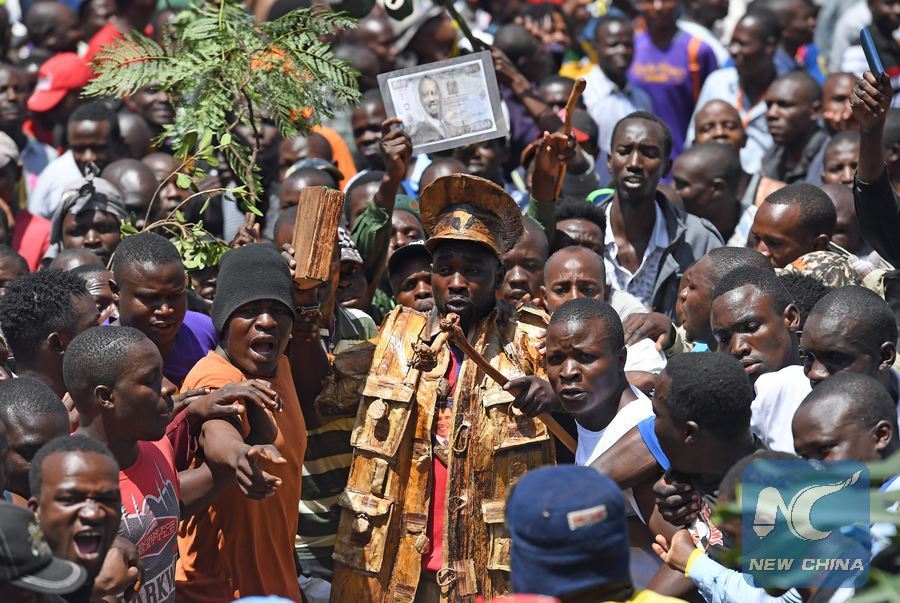
Photo taken on Jan. 30, 2018, shows excited opposition supporters gather at the Uhuru Park, Nairobi, where Raila Odinga swore in as the "People's President." (Xinhua/Chen Cheng)

NAIROBI, Jan. 31 (Xinhua) -- Kenyans have turned the social media into a battlefield of opinions after opposition leader Raila Odinga on Tuesday swore in as the "People's President."

Social media platforms that include Facebook, Twitter and YouTube became the only channels that many anxious citizens could access information on the event after the government switched off mainstream TV stations.

Odinga took oath as the parallel president, a move that the government had termed illegal.

Initially, there were fears of chaos due to confrontation between the police and opposition supporters after the government banned the event.

However, police officers who had been sent to man Uhuru Park, the venue of the ceremony, withdrew allowing thousands of opposition National Super Alliance (NASA) supporters to attend the fete.

But the government, through the Communication Authority of Kenya (CA), switched off several mainstream TV stations, plunging millions of people hungry for information into darkness. The popular TV stations switched off included Citizen, NTV and KTN News.

Many Kenyans thus took it upon themselves to inform others of what was happening at Uhuru Park in the capital and other towns across the country as they shared messages and photos.

"The people have decided. No turning back. Today we have a new president," Twitted Abisai, a NASA supporter under the hashtag #NASAOathDay, with photos of Odinga taking oath at Uhuru Park.

"It is an oath. It is an oath. It is an oath," Dikembe, a NASA supporter, tweeted the message accompanied with photos.

Jubilee supporters, similarly, used the internet to pass their messages in bid to play down the opposition event.

"The real president is in Addis Ababa with others before he jets back into the country in the afternoon," Tweeted Jubilee MP Ngunjiri Wambugu, mocking opposition supporters.

However, as internet remained abuzz with the event, there were fears that it could also be the next victim.

The government prior to last year's Aug. 8 and Oct. 26 polls had severally warned that the internet would be shut down if it becomes a threat to national security.

Kenya, according to the Communication Authority, had 30.6 million internet subscriptions as at the quarter ending September, the majority of whom are on mobile phone. On the other hand, there were about 5 million TV subscriptions.

However, while internet subscriptions are higher, TV reaches millions of audiences because it is free, unlike mobile, where fewer people who own smart phones can live stream events.

"Yes, TV has a bigger audience but millions today followed the event on the internet because they had no any other choice. The media shutdown is certainly bad for democracy but internet usage today has hit a historical level. When the service providers would announce the figures, they would shock us," said Bernard Mwaso, a consultant with Edell IT Solution.

Tuesday's shutdown of TV stations in Kenya is the second in about a decade, with the last seen in 2007 following a disputed election pitting Odinga and former President Mwai Kibaki.

?

?

Back to Top Close
Xinhuanet

Who's president? Kenyan social media divided on Raila's "swear-in"

Source: Xinhua 2018-01-31 18:00:59

Photo taken on Jan. 30, 2018, shows excited opposition supporters gather at the Uhuru Park, Nairobi, where Raila Odinga swore in as the "People's President." (Xinhua/Chen Cheng)

NAIROBI, Jan. 31 (Xinhua) -- Kenyans have turned the social media into a battlefield of opinions after opposition leader Raila Odinga on Tuesday swore in as the "People's President."

Social media platforms that include Facebook, Twitter and YouTube became the only channels that many anxious citizens could access information on the event after the government switched off mainstream TV stations.

Odinga took oath as the parallel president, a move that the government had termed illegal.

Initially, there were fears of chaos due to confrontation between the police and opposition supporters after the government banned the event.

However, police officers who had been sent to man Uhuru Park, the venue of the ceremony, withdrew allowing thousands of opposition National Super Alliance (NASA) supporters to attend the fete.

But the government, through the Communication Authority of Kenya (CA), switched off several mainstream TV stations, plunging millions of people hungry for information into darkness. The popular TV stations switched off included Citizen, NTV and KTN News.

Many Kenyans thus took it upon themselves to inform others of what was happening at Uhuru Park in the capital and other towns across the country as they shared messages and photos.

"The people have decided. No turning back. Today we have a new president," Twitted Abisai, a NASA supporter under the hashtag #NASAOathDay, with photos of Odinga taking oath at Uhuru Park.

"It is an oath. It is an oath. It is an oath," Dikembe, a NASA supporter, tweeted the message accompanied with photos.

Jubilee supporters, similarly, used the internet to pass their messages in bid to play down the opposition event.

"The real president is in Addis Ababa with others before he jets back into the country in the afternoon," Tweeted Jubilee MP Ngunjiri Wambugu, mocking opposition supporters.

However, as internet remained abuzz with the event, there were fears that it could also be the next victim.

The government prior to last year's Aug. 8 and Oct. 26 polls had severally warned that the internet would be shut down if it becomes a threat to national security.

Kenya, according to the Communication Authority, had 30.6 million internet subscriptions as at the quarter ending September, the majority of whom are on mobile phone. On the other hand, there were about 5 million TV subscriptions.

However, while internet subscriptions are higher, TV reaches millions of audiences because it is free, unlike mobile, where fewer people who own smart phones can live stream events.

"Yes, TV has a bigger audience but millions today followed the event on the internet because they had no any other choice. The media shutdown is certainly bad for democracy but internet usage today has hit a historical level. When the service providers would announce the figures, they would shock us," said Bernard Mwaso, a consultant with Edell IT Solution.

Tuesday's shutdown of TV stations in Kenya is the second in about a decade, with the last seen in 2007 following a disputed election pitting Odinga and former President Mwai Kibaki.

?

?

010020070750000000000000011100001369394111