中文字幕网伦射乱中文-超清中文乱码字幕在线观看-亚洲v国产v欧美v久久久久久-久久性网-手机在线成人av-成人六区-国产人与zoxxxx另类一一-青青草国产久久精品-蜜桃av久久久一区二区三区麻豆-成人av一区二区免费播放-在线视频麻豆-www爱爱-成人免费看片视频-性欧美老肥妇喷水-五月99久久婷婷国产综合亚洲-亚洲最色-各种含道具高h调教1v1男男-91丨porny丨国产-国产精品无码专区在线观看不卡-大香伊人

 
Ethiopia takes inspiration from China's success for own development
                 Source: Xinhua | 2018-05-10 23:40:02 | Editor: huaxia

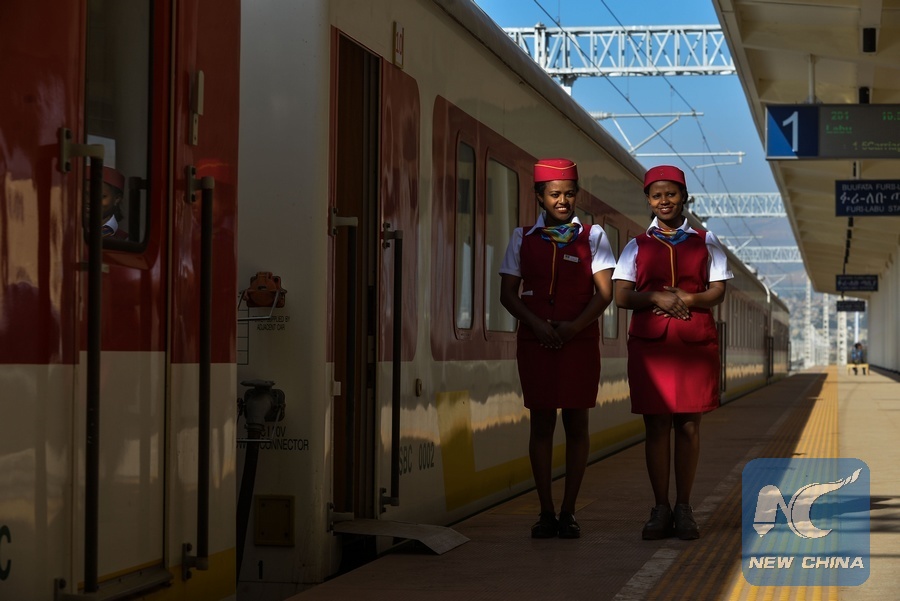
Ethiopian attendants walk along a train at the Lebu station in Addis Ababa, capital of Ethiopia, Jan. 1, 2018. (Xinhua/Michael Tewelde)

ADDIS ABABA, May 10 (Xinhua) -- Ahmed Shide, Minister of Ethiopia Government Communications Affairs Office (GCAO), told Xinhua that China hasn't only become Ethiopia's top economic partner but a model for Ethiopia's economic ambitions.

Learning from Chinese economic growth experience, Ethiopia will have about 15 industrial parks by June, most of them built with Chinese money and expertise.

Ethiopia has also heavily invested with Chinese assistance in road, rail and air infrastructures to alleviate transportation problems for Ethiopia's exports.

Shide said landlocked Ethiopia has seen China's success in having an efficient and effective infrastructure to facilitate exports from industrial parks and as such is building a "development belt" to copy the Chinese success story.

The "development belt" will see Ethiopia build industrial parks located along the path of existing or under-construction rail lines to speedily transport products made in industrial parks to ports in neighboring Djibouti.

After reaching Djibouti, the products are then loaded and shipped to their final export destinations including China.

About half of the 15 industrial parks Ethiopia is constructing or has constructed are located along the 756kms Ethio-Djibouti electrified rail line built with Chinese expertise and finances at a cost of 4 billion U.S. dollars.

The rail line which recently started commercial operations has cut transportation time for Ethiopian goods to Djibouti ports from two days to 10 hours, giving a leg up for Ethiopia's economic dreams of becoming a light manufacturing hub in Africa and middle-income economy by 2025.

Shide said Ethiopia is also looking to further boost ties with China on air infrastructure, as the Asian economic powerhouse is the single largest market for its national carrier Ethiopian Airlines (ET).

ET currently flies to five destinations in China -- Beijing, Shanghai, Chengdu, Hong Kong and Guangzhou, and plans to add Shenzhen as its sixth destination in June.

With China working on being an airplane manufacturing center, Shide adds he foresees ET will soon be a customer of fully developed Chinese airplanes.

LEARN MORE FROM CHINA

With Ethiopia utilizing Chinese hard infrastructure expertise and money to support its ambitious economic plans, Gedion Jalata, CEO at Center of Excellence International Consult, an Ethiopian consulting firm, told Xinhua Ethiopia should also be learning from Chinese success in creating a meritocratic bureaucracy.

"China succeeded in bringing out of poverty 700 million people in 30 years not just because it built physical infrastructure, but it worked on its human capital helping create an efficient state bureaucracy, that's a soft infrastructure Ethiopia should build," Jalata said.

He said there are simple things the new Ethiopian administration of Prime Minister Abiy Ahmed can do if Ethiopia is to effectively learn from China's remarkable economic development.

"Ethiopian leadership, just like Chinese leadership, should have the political will, determination and commitment to meet the country's economic ambitions," Jalata added.

Back to Top Close
Xinhuanet

Ethiopia takes inspiration from China's success for own development

Source: Xinhua 2018-05-10 23:40:02

Ethiopian attendants walk along a train at the Lebu station in Addis Ababa, capital of Ethiopia, Jan. 1, 2018. (Xinhua/Michael Tewelde)

ADDIS ABABA, May 10 (Xinhua) -- Ahmed Shide, Minister of Ethiopia Government Communications Affairs Office (GCAO), told Xinhua that China hasn't only become Ethiopia's top economic partner but a model for Ethiopia's economic ambitions.

Learning from Chinese economic growth experience, Ethiopia will have about 15 industrial parks by June, most of them built with Chinese money and expertise.

Ethiopia has also heavily invested with Chinese assistance in road, rail and air infrastructures to alleviate transportation problems for Ethiopia's exports.

Shide said landlocked Ethiopia has seen China's success in having an efficient and effective infrastructure to facilitate exports from industrial parks and as such is building a "development belt" to copy the Chinese success story.

The "development belt" will see Ethiopia build industrial parks located along the path of existing or under-construction rail lines to speedily transport products made in industrial parks to ports in neighboring Djibouti.

After reaching Djibouti, the products are then loaded and shipped to their final export destinations including China.

About half of the 15 industrial parks Ethiopia is constructing or has constructed are located along the 756kms Ethio-Djibouti electrified rail line built with Chinese expertise and finances at a cost of 4 billion U.S. dollars.

The rail line which recently started commercial operations has cut transportation time for Ethiopian goods to Djibouti ports from two days to 10 hours, giving a leg up for Ethiopia's economic dreams of becoming a light manufacturing hub in Africa and middle-income economy by 2025.

Shide said Ethiopia is also looking to further boost ties with China on air infrastructure, as the Asian economic powerhouse is the single largest market for its national carrier Ethiopian Airlines (ET).

ET currently flies to five destinations in China -- Beijing, Shanghai, Chengdu, Hong Kong and Guangzhou, and plans to add Shenzhen as its sixth destination in June.

With China working on being an airplane manufacturing center, Shide adds he foresees ET will soon be a customer of fully developed Chinese airplanes.

LEARN MORE FROM CHINA

With Ethiopia utilizing Chinese hard infrastructure expertise and money to support its ambitious economic plans, Gedion Jalata, CEO at Center of Excellence International Consult, an Ethiopian consulting firm, told Xinhua Ethiopia should also be learning from Chinese success in creating a meritocratic bureaucracy.

"China succeeded in bringing out of poverty 700 million people in 30 years not just because it built physical infrastructure, but it worked on its human capital helping create an efficient state bureaucracy, that's a soft infrastructure Ethiopia should build," Jalata said.

He said there are simple things the new Ethiopian administration of Prime Minister Abiy Ahmed can do if Ethiopia is to effectively learn from China's remarkable economic development.

"Ethiopian leadership, just like Chinese leadership, should have the political will, determination and commitment to meet the country's economic ambitions," Jalata added.

010020070750000000000000011100001371703711