中文字幕网伦射乱中文-超清中文乱码字幕在线观看-亚洲v国产v欧美v久久久久久-久久性网-手机在线成人av-成人六区-国产人与zoxxxx另类一一-青青草国产久久精品-蜜桃av久久久一区二区三区麻豆-成人av一区二区免费播放-在线视频麻豆-www爱爱-成人免费看片视频-性欧美老肥妇喷水-五月99久久婷婷国产综合亚洲-亚洲最色-各种含道具高h调教1v1男男-91丨porny丨国产-国产精品无码专区在线观看不卡-大香伊人

 
Piracy incidents double off coast of East Africa in 2017: study
                 Source: Xinhua | 2018-05-22 16:07:13 | Editor: huaxia

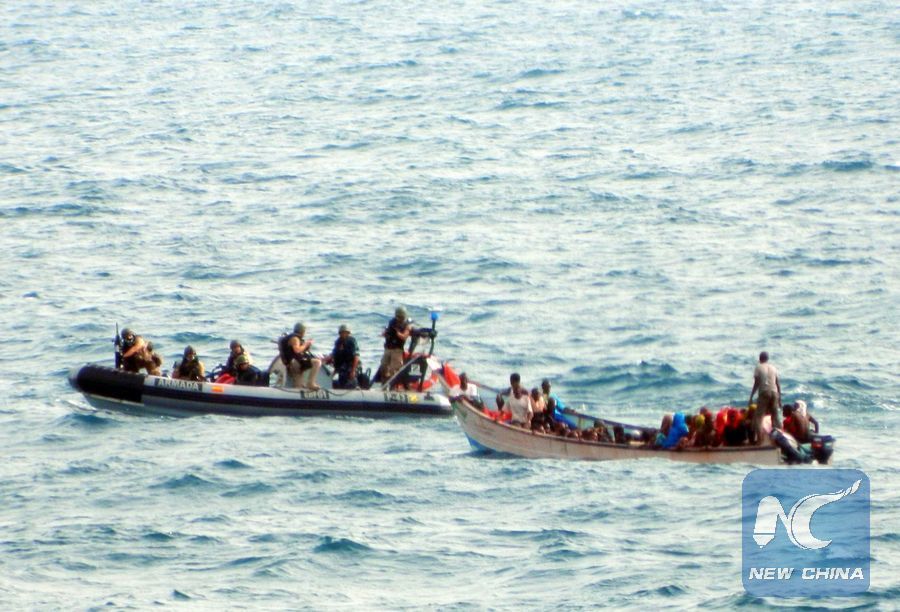
File photo shows crew members of Spanish Armada Vessel "Relampago" rescue 68 people who were drifting in a small boat, at the Gulf of Aden, the Indian Ocean, on Sept. 10, 2012. (Xinhua/AGENCIAPUNTOPRESS)

NAIROBI, May 22 (Xinhua) -- The number of piracy incidents doubled off the coast of East Africa in 2017 compared to 2016, an international maritime body said in its latest report released on Monday.

This indicates that Somali criminal networks are still capable of sophisticated attacks, according to the report by One Earth Future (OEF)'s Oceans Beyond Piracy program.

The report calls for new approach to combat maritime threats as the total number of piracy/armed robbery attacks against foreign vessels increased to 54 in 2017 compared to 27 in 2016.

"Pirate activity in 2017 clearly demonstrates that pirate groups retain their ability to organize and implement attacks against ships transiting the region," said Maisie Pigeon, the report's lead author.

The organization said the total cost of Somali piracy remains within the historical norm of the past three years, noting that there was a 13 percent decrease in the use of privately contracted armed security personnel between January 2015 and December 2017.

The study says crew members of the FV Siraj still remain in captivity after three years of hijack, noting that a total of 1,102 seafarers were affected by piracy and armed robbery in the Western Indian Ocean region in 2017.

"Additional threats complicate the maritime security picture in the Western Indian Ocean region, including spillover into the maritime space from the political conflict in Yemen," says the report.

According to maritime experts, Somali pirates tend to be well armed with automatic weapons and rocket propelled grenade (RPG) and sometimes use skiffs launched from mother vessels, which may be hijacked fishing vessels or dhows, to conduct attacks far from the Somali coast.

The experts said lack of economic opportunities and the prevalence of illegal fishing are pushing more Somalis to turn to piracy - partly as a form of protest and partly because they see no other options.

"There are now a wide range of threats to shipping near the Horn of Africa that have been complicated by the conflict and instability in Yemen," said Phil Belcher, Marine Director of Intertanko.

"We are advising our members to consider a more comprehensive security assessment to take into account other threats beyond traditional piracy emanating from the regional conflict in Yemen," Belcher said.

The report analyzes the human and economic impacts of maritime piracy and robbery at sea in the Western Indian Ocean Region, the Gulf of Guinea, Asia, and Latin America and the Caribbean.

Back to Top Close
Xinhuanet

Piracy incidents double off coast of East Africa in 2017: study

Source: Xinhua 2018-05-22 16:07:13

File photo shows crew members of Spanish Armada Vessel "Relampago" rescue 68 people who were drifting in a small boat, at the Gulf of Aden, the Indian Ocean, on Sept. 10, 2012. (Xinhua/AGENCIAPUNTOPRESS)

NAIROBI, May 22 (Xinhua) -- The number of piracy incidents doubled off the coast of East Africa in 2017 compared to 2016, an international maritime body said in its latest report released on Monday.

This indicates that Somali criminal networks are still capable of sophisticated attacks, according to the report by One Earth Future (OEF)'s Oceans Beyond Piracy program.

The report calls for new approach to combat maritime threats as the total number of piracy/armed robbery attacks against foreign vessels increased to 54 in 2017 compared to 27 in 2016.

"Pirate activity in 2017 clearly demonstrates that pirate groups retain their ability to organize and implement attacks against ships transiting the region," said Maisie Pigeon, the report's lead author.

The organization said the total cost of Somali piracy remains within the historical norm of the past three years, noting that there was a 13 percent decrease in the use of privately contracted armed security personnel between January 2015 and December 2017.

The study says crew members of the FV Siraj still remain in captivity after three years of hijack, noting that a total of 1,102 seafarers were affected by piracy and armed robbery in the Western Indian Ocean region in 2017.

"Additional threats complicate the maritime security picture in the Western Indian Ocean region, including spillover into the maritime space from the political conflict in Yemen," says the report.

According to maritime experts, Somali pirates tend to be well armed with automatic weapons and rocket propelled grenade (RPG) and sometimes use skiffs launched from mother vessels, which may be hijacked fishing vessels or dhows, to conduct attacks far from the Somali coast.

The experts said lack of economic opportunities and the prevalence of illegal fishing are pushing more Somalis to turn to piracy - partly as a form of protest and partly because they see no other options.

"There are now a wide range of threats to shipping near the Horn of Africa that have been complicated by the conflict and instability in Yemen," said Phil Belcher, Marine Director of Intertanko.

"We are advising our members to consider a more comprehensive security assessment to take into account other threats beyond traditional piracy emanating from the regional conflict in Yemen," Belcher said.

The report analyzes the human and economic impacts of maritime piracy and robbery at sea in the Western Indian Ocean Region, the Gulf of Guinea, Asia, and Latin America and the Caribbean.

010020070750000000000000011100001371978241