中文字幕网伦射乱中文-超清中文乱码字幕在线观看-亚洲v国产v欧美v久久久久久-久久性网-手机在线成人av-成人六区-国产人与zoxxxx另类一一-青青草国产久久精品-蜜桃av久久久一区二区三区麻豆-成人av一区二区免费播放-在线视频麻豆-www爱爱-成人免费看片视频-性欧美老肥妇喷水-五月99久久婷婷国产综合亚洲-亚洲最色-各种含道具高h调教1v1男男-91丨porny丨国产-国产精品无码专区在线观看不卡-大香伊人

 
Obesity linked to lower breast cancer risk in young women: study
                 Source: Xinhua | 2018-06-28 03:03:01 | Editor: huaxia

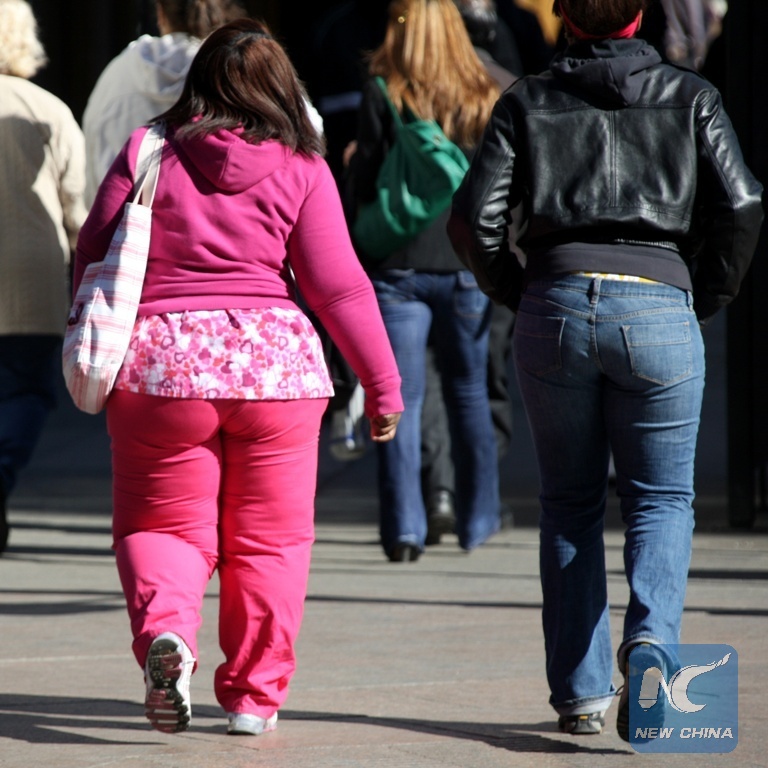
File Photo

WASHINGTON, June 27 (Xinhua) -- Young women with high body fat have a decreased chance of developing breast cancer before menopause, according to a study published on Wednesday in the journal JAMA Oncology.

"It is well known that women who gain weight, particularly after menopause, carry an increased risk of postmenopausal breast cancer," said Dale Sandler, the paper's co-senior author and head of the Epidemiology Branch at the National Institute of Environmental Health Sciences (NIEHS), part of the National Institutes of Health.

"Our finding that breast cancer risk is not increased in obese premenopausal women, and in fact decreases, points to the possibility that different biologic mechanisms are responsible for causing breast cancer in younger women," said Sandler.

Sandler and other researchers pooled data from 19 different studies, comprising 758,592 women from around the world.

The participants ranged in age from 18 to 54 at the beginning of study. Volunteers for each individual study filled out several rounds of questionnaires, which included height, weight, and other health-related factors.

With this information, researchers evaluated the risk of developing breast cancer in relation to body mass index (BMI) in the following age ranges: 18-24, 25-34, 35-44, and 45-54. BMI is a way to measure the amount of body fat.

Overall, 13,082 participants, or 1.7 percent, developed breast cancer during the observed time periods.

The scientists determined that relative risk of premenopausal breast cancer was reduced 12 to 23 percent for each five-unit increase in BMI, depending on age.

The strongest effect was seen in relation to BMI at ages 18-24, with very obese women in this age group being 4.2 times less likely to develop premenopausal breast cancer compared to women with low BMI at the same age, according to the study.

While Sandler and her colleagues are unsure why young, premenopausal women with a high BMI appear to be protected against breast cancer, she cautioned that young women should not intentionally gain weight to lower their breast cancer risk.

"There are so many health risks associated with being overweight or obese," Sandler said. "We still believe it is important for women to maintain a healthy weight throughout life."

Back to Top Close
Xinhuanet

Obesity linked to lower breast cancer risk in young women: study

Source: Xinhua 2018-06-28 03:03:01

File Photo

WASHINGTON, June 27 (Xinhua) -- Young women with high body fat have a decreased chance of developing breast cancer before menopause, according to a study published on Wednesday in the journal JAMA Oncology.

"It is well known that women who gain weight, particularly after menopause, carry an increased risk of postmenopausal breast cancer," said Dale Sandler, the paper's co-senior author and head of the Epidemiology Branch at the National Institute of Environmental Health Sciences (NIEHS), part of the National Institutes of Health.

"Our finding that breast cancer risk is not increased in obese premenopausal women, and in fact decreases, points to the possibility that different biologic mechanisms are responsible for causing breast cancer in younger women," said Sandler.

Sandler and other researchers pooled data from 19 different studies, comprising 758,592 women from around the world.

The participants ranged in age from 18 to 54 at the beginning of study. Volunteers for each individual study filled out several rounds of questionnaires, which included height, weight, and other health-related factors.

With this information, researchers evaluated the risk of developing breast cancer in relation to body mass index (BMI) in the following age ranges: 18-24, 25-34, 35-44, and 45-54. BMI is a way to measure the amount of body fat.

Overall, 13,082 participants, or 1.7 percent, developed breast cancer during the observed time periods.

The scientists determined that relative risk of premenopausal breast cancer was reduced 12 to 23 percent for each five-unit increase in BMI, depending on age.

The strongest effect was seen in relation to BMI at ages 18-24, with very obese women in this age group being 4.2 times less likely to develop premenopausal breast cancer compared to women with low BMI at the same age, according to the study.

While Sandler and her colleagues are unsure why young, premenopausal women with a high BMI appear to be protected against breast cancer, she cautioned that young women should not intentionally gain weight to lower their breast cancer risk.

"There are so many health risks associated with being overweight or obese," Sandler said. "We still believe it is important for women to maintain a healthy weight throughout life."

010020070750000000000000011105091372852771