XI'AN, Sept. 6 (Xinhua) -- What would you take with you on a trip to Africa? Sunscreen? Or a pair of binoculars to watch wildlife? For Hai Jiangbo, seeds and a straw hat are what he brings with every time he traverses the continent.
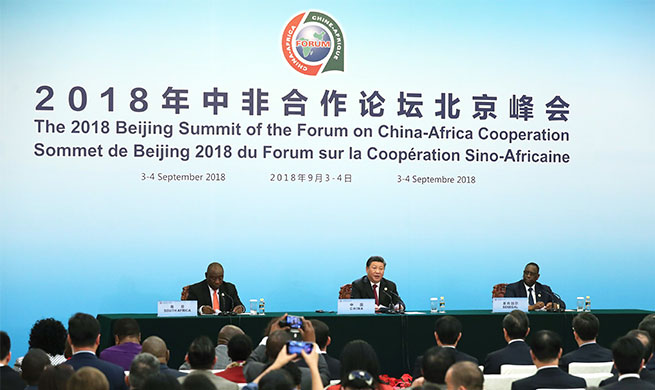
Hai, 52, set out for his 24th trip to Africa on Tuesday, shortly after the Beijing Summit of the Forum on China-Africa Cooperation (FOCAC) opened.
Over the past 15 years, Hai has been making trips like this and spending months in the continent to offer his agricultural expertise to African farmers. This trip, he will cover Mozambique, Egypt, Morocco and Eritrea.
His suitcase was filled with seeds of a dozen varieties, teaching DVDs and distiller's yeast, but Hai says that by far the most important thing is his straw hat.
"This straw hat is my best friend when I'm in Africa," said Hai. On his first few trips he wore a cap but he was still badly sunburnt while working on the test fields. To protect himself from the strong African sun, he needed a wider brim.
Now, his hat has become something every time he makes new African friends who he asks to sign his hat, as a souvenir of the trip. He hopes to cover the hat with signatures in his travels across the continent.
Back in China, Hai is an associate professor with Northwest Agriculture and Forestry University (NWAFU) based in Yangling Agriculture Hi-Tech Industrial Zone, a national-level high-tech development zone in Shaanxi Province.
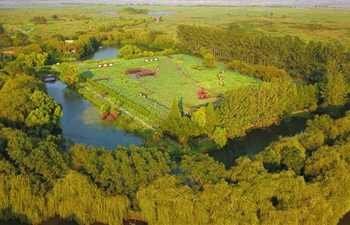
Covering an area of 135 square kilometers, Yangling has been a testing ground for much of China's crop varieties, agricultural technology and management techniques, with more than 7,000 researchers. In the past 20 years, more than 1,000 new crop varieties and agricultural technologies were developed here.
As a leading university in agriculture studies, NWAFU has received students from colleges, institutes and governments in 59 countries over the past decade, and has sent 52 teachers like Hai abroad, particularly to Africa, teaching and offering support for agricultural development at a local level.
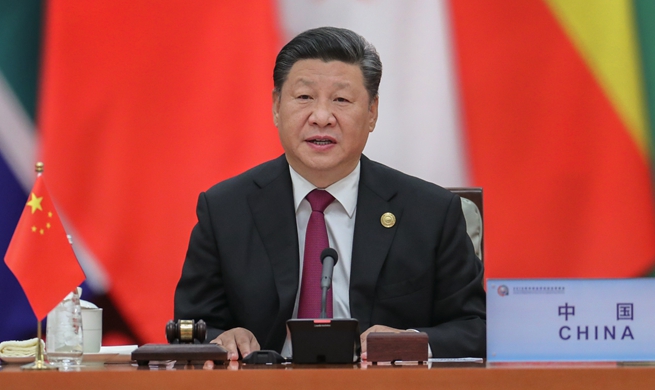
At the FOCAC Beijing Summit, China has vowed to work with Africa to formulate and implement a plan of action to promote cooperation on agricultural modernization, including 50 agricultural assistance programs, and 500 senior agricultural experts to be sent to Africa.
Hai is just one of these experts who will work with Chinese and African colleagues to support Africa's food security. Now, Hai's job in Africa is to promote Yangling's dryland farming practices: a method of farming in dry climates without irrigation, using drought-resistant crops and moisture conservation techniques.
And he has fallen in love with the continent he calls home for several months of the year.
"I'm half African now," Hai joked. He loves to eat Ugali, an African cornmeal porridge, with his hands. But he didn't forget to bring a luoluo, a type of round tray for making liangpi, the famous noodle-like Chinese rice dish.
"I make liangpi in Africa not only to soothe my homesickness but also to test the quality of the crops we plant there," he said.
Surprisingly, cooking is something that Hai considers an important part of his job. Once, in Ethiopia, he made authentic Chinese pancakes, not just as a tasty treat for his students but also as proof of their farming success.
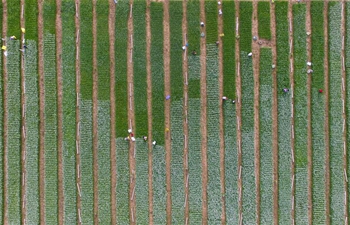
Still, the most precious things in his luggage are the seeds. They are disease-resistant, pest-resistant and can grow in near-infertile soil. These are super-seeds and Hai has high hopes for increasing the yield on more than 1,300 hectares of paddies in Mozambique.
At the last minute, Hai threw some cowpea seeds into his suitcase, next to his straw hat. He wants to test interplanting of cowpea and corn to maximize the utility of fields.
"African farmers have been growing mostly industrial crops. They are not experienced enough with growing food, " said Hai, "In northwest China we have similar conditions to Africa, with the dry lean land. So we want to share the fruits of our research with African countries and help them feed their people."
Hai and his team achieved a yield of seven tonnes per hectare in the demonstration paddies in Cameroon. Hai also taught a local farmer how to grow watermelons. But the farmer ignored Hai's advice against overusing herbicide in the first year, and was reduced to tears over the bad harvest.
Hai didn't give up on him. He offered the farmer more seeds and more of his time and patience. The next year they reaped a bumper harvest and the farmer's crops sold like hot cakes, at 10 yuan (1.5 U.S. dollars) a melon.
As the harvests bear more crops, farmers can go beyond subsistence and begin to profit on their excess yield. One of the most popular products is rice wine. That's why Hai has added distiller's yeast to his case.
Hai's years of dedication to his work and his students has not gone unnoticed, the lives he has touched are forever changed.
"Professor Hai is not just walking around in his straw hat, planting seeds in Africans' fields, he's planting hope in our hearts," said Efienne Niyigaba, one of Hai's Rwandan students.